
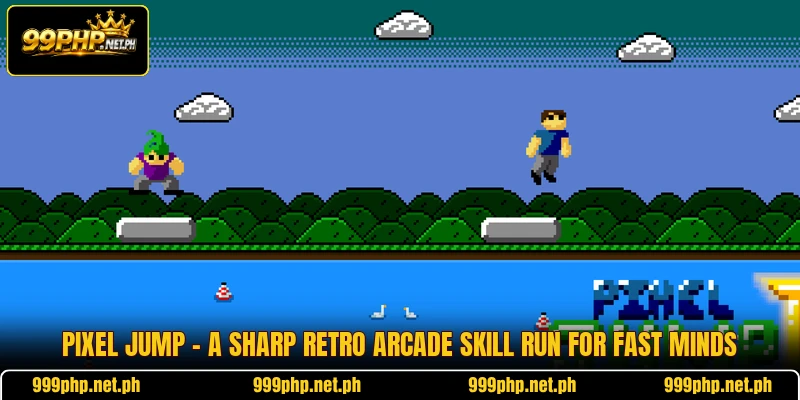
Pixel Jump blends retro blocks with tight movement across compact stage patterns. Each jump carries weight because timing, spacing, landing control shape the full run. This article is written for arcade players at 999PHP, to help them understand clean jump timing, aiming at sharper route judgment during each session.
Classic pixel art design of Pixel Jump
Retro visuals create a direct arcade mood through square blocks, clear outlines and limited color depth. In Pixel Jump, the pixel style helps each platform stand apart without heavy visual noise during fast movement. Simple scenery also supports quicker decisions because the player can read gaps, hazards, safe landings before hesitation breaks rhythm.
A strong pixel layout depends on contrast rather than decorative clutter during each stage. Background pieces should stay quiet while ledges, spikes, moving parts remain easier to separate at speed. This design choice gives the game a familiar old school tone while keeping modern control reading clean across short arcade rounds.

Accurate jump control mechanics in Pixel Jump
Jump control works best when pressure, release timing, landing distance stay consistent across each stage. Pixel Jump rewards calm input because small movement changes can alter the next platform route. A steady control pattern also makes hazard reading easier after several failed attempts within tight arcade sections.
- Tap timing: A short tap should handle small gaps while a longer press can support wider platform distance with safer landing space.
- Landing angle: The character should reach the platform center because edge landings often reduce recovery time before the next jump.
- Momentum reading: Forward movement needs steady attention since extra speed can turn a clear route into a missed landing.
- Retry discipline: Repeating the same section with slower input review helps reveal whether failure came from timing or route choice.
- Air control: Small midair corrections should stay measured because sudden direction changes can pull the character away from the intended landing zone.
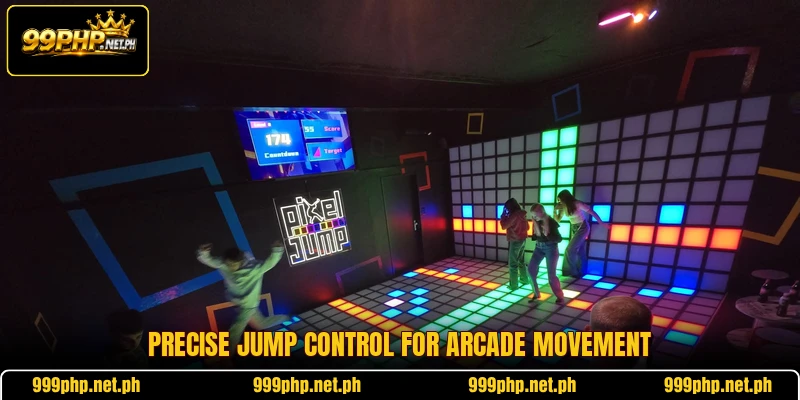
Obstacle system in Pixel Jump
Obstacle pressure shapes the pace of each run through risk, spacing, reaction demand. Each hazard changes the mental rhythm before the next platform appears.
Sharp spike blocks cause direct player damage
Spike blocks use blunt visual language that makes danger easy to identify during fast movement. In Pixel Jump, their square shape often sits near narrow landings where late correction becomes risky. A clean approach means reading the spike position before jumping rather than reacting after the character already leaves the platform.
Direct damage hazards work because they punish careless contact without needing complex rules. The player must judge whether a jump should clear the full block or land before it. This structure keeps tension simple yet strict, especially when several spike blocks appear between safe ledges in a compact stage.
Spike placement also affects how a route feels from one section to the next. A low spike may test short hops while a raised spike can demand a delayed jump. Good stage reading comes from noticing height, distance, recovery space before the same hazard causes repeated damage through rushed movement.
View more: Pixel Treasure – Hidden Map Chase With Retro Gold Rooms
Bottomless pits in Pixel Jump require exact aerial control
Bottomless pits create harsher pressure because a missed jump ends the attempt immediately. Unlike damage blocks, these gaps leave no recovery space after poor timing. The player must measure distance from takeoff to landing with steady focus, especially when platform width changes across several quick sections.
A long pit often tests patience before it tests speed during an arcade run. Early takeoff can leave the character falling short while late input can push the landing beyond safety. Consistent rhythm helps because the same jump length feels more predictable after several measured attempts.
Pit sections also make camera clarity important because the next ledge may appear near the screen edge. A clean view lets the player prepare the jump arc before panic sets in. When the gap follows another hazard, the safest answer is usually controlled movement rather than aggressive forward pressure.
Spring launcher platforms help characters move forward fast
Spring platforms change the normal jump rhythm by adding sudden upward or forward force. The player must accept the launch path while preparing for the next landing point. In Pixel Jump, this mechanic can make a calm section feel faster because control shifts from manual jumping to aerial correction.
A launcher feels useful when its direction remains readable before contact occurs. Confusing placement can make the bounce feel random, so the stage must show the target path clearly. Strong platform design gives enough space after launch for adjustment while still preserving the speed boost that defines the obstacle.
Spring movement also teaches route planning because the best result often starts before touching the platform. The player should approach with stable speed to avoid a strange bounce angle. After launch, attention moves toward landing height, nearby hazards, next jump timing so the fast motion stays under control.

Moving walls demand flexible dodge timing
Moving walls add pressure through timing windows that change during each attempt. Their motion can block a route, narrow a path, or force a jump earlier than expected. Strong obstacle reading starts with watching the wall cycle before committing to movement across the next platform sequence.
A moving wall becomes harder when its speed shifts near another danger point. In Pixel Jump, this setup can turn a simple jump into a layered reaction test. The player must judge wall position, platform edge, character momentum within a short window while avoiding rushed input that breaks the route.
Flexible dodging depends on restraint because every wall does not require immediate movement. Sometimes the better choice is waiting half a beat until the path clears. This small delay can protect the run from avoidable impact, especially when the next landing zone is short or surrounded by other hazards.
View more Category: Arcade
Conclusion
Pixel Jump works through clear visuals, strict jump timing, readable hazard pressure across short arcade runs. Its strongest appeal comes from learning rhythm slowly, then applying cleaner movement under rising stage pressure. For a neat arcade start at 999PHP, create an account when ready.